Hanoi, 7 May 2013 A new international research hub has opened in Hanoi, Vietnam, to develop climate-smart farming technologies that reduce the impact of climate change on food production in Vietnam and across Southeast Asia.
The CGIAR Research Program on Climate Change, Agriculture, and Food Security (CCAFS) Southeast Asia regional office in Hanoi will support the work of many contributing international and Vietnamese research and development partners as they work toward providing solutions to ensure climate-smart agriculture in the region. Read more »
April 15th 2013: The Hunger - Nutrition - Climate Justice conference, organised in partnership between the Irish Government, Mary Robinson Foundation – Climate Justice, the CGIAR Research Program on Climate Change, Agriculture and Food Security (CCAFS) and the World Food Programme (WFP), begins today at Dublin Castle and will conclude on Tuesday April 16th at 4.30pm.
The event is unique in the way it aims to explore the links between climate change, hunger and nutrition, whilst placing farmers at the center of the of the development efforts to help solve the problems of food insecurity. It aims to do this by enabling global leaders, policy-makers and scientists to listen directly to the representatives of communities from Africa, Asia and Central America.
Frank Rijsberman, CEO of the CGIAR Consortium commented, “This meeting is an opportunity to put food security through climate smart agriculture at the top of the political agenda. While doing so, we want to make sure our research agendas continue the G8’s commitment to the world’s poor. We must focus on the needs of smallholder farmers – they have the least capacity to adapt and will be the most affected by climate change.” Read more »
Authors Argue for Urgent Investment to Deploy Available Solutions More Widely
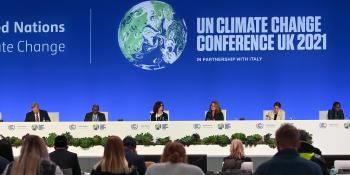
Doha, Qatar: Women, men and children living in rural communities in the world’s dry areas are the hardest hit by today’s changing climate patterns – ranging from floods and drought to unpredictable rainfall and hot and cold temperature extremes, according to a report released today at the United Nations climate change conference.
Strategies for Combating Climate Change in Drylands Agriculture - published today by a group of leading international experts in climate change and agriculture – asks why agricultural solutions are not a higher political priority in the international climate change debate. The authors argue that many of the solutions are available now but increased investment and urgent action are needed to bring food security to people in the world’s dry areas. Read more »
Food waste responsible for up to 10 percent of global emissions; biofuels may not reduce greenhouse gases; agriculture has potential to sequester millions of tonnes of carbon each year, included in “Big Facts”
DOHA (30 November 2012)—Applying scientific answers to the consumer question, “What do our food choices have to do with heat, hurricanes, floods, and droughts?”, the CGIAR Research Program on Climate Change, Agriculture and Food Security (CCAFS) is launching today a set of “Big Facts” that highlight the complex relationship between agriculture and climate change. This effort illustrates not only the profound and diverse impacts of the changing climate on marine fisheries, livestock, forests, biodiversity and food crops but also the effects of agricultural activities, including emissions from biofuel production, on climate change.
The suite of 30 key facts, featuring infographics and compelling photographs from the field, cover everything from undernourishment and population to forestry and fisheries—integrating the latest and most authoritative research on relevant topics. To avoid oversimplification of complex issues and to provide additional information, a sub-set of facts supports each “Big Fact.” The result: a one-stop, scientific source for facts about climate change, agriculture and food security. Read more »
COPENHAGEN (31 October, 2012)—Feeding the world releases up to 17,000 megatonnes of carbon dioxide into the atmosphere annually, according to a new analysis released today by the CGIAR Research Program on Climate Change, Agriculture and Food Security (CCAFS). But while the emissions “footprint” of food production needs to be reduced, a companion policy brief by CCAFS lays out how climate change will require a complete recalibration of where specific crops are grown and livestock are raised.
Together, Climate Change and Food Systems (published in the 2012 Annual Review of Environment and Resources) and Recalibrating Food Production in the Developing World: Global Warming Will Change More Than Just the Climate (published by CCAFS), shed new light on the intertwining evolutions of climate change and the world’s food system and their potential impact on humanity’s relationship with food. Read more »
NAIROBI, KENYA (7 September 2012)—Smallholder farmers across East Africa have started to embrace climate-resilient farming approaches and technologies, according to new research recently published by the CGIAR Research Program on Climate Change, Agriculture and Food Security (CCAFS). At the same time, the survey evidence suggests that many of the changes in farming practices are incremental, rather than transformative in nature, and that high levels of food insecurity prevent many from making all of the changes needed in order to cope with a changing climate
The study—released one year after East Africa’s worst drought in 60 years hit its peak—is based on a survey of over 700 farming households in four East African countries carried out by CCAFS, part of a larger effort covering 5,040 households in 252 villages across 36 sites in 12 countries in East Africa, West Africa and South Asia. It appeared online before publication in the journal Food Security. Read more »
600 Global Experts Convene to Discuss Agriculture’s Role in a Green Economy at Agriculture Day Event Ahead of Rio+20 Summit
RIO DE JANEIRO, BRAZIL: A consortium of the world's leading agricultural organisations meet today in the lead-up to the Rio+20 Summit to discuss agriculture’s role in building a global green economy and showcase examples of best practices from around the world.
Agriculture and Rural Development Day (ARDD) unites around 600 experts – including policymakers and negotiators, farmers, scientists and the media. The day aims to ensure that the new vision for sustainable development outlined at Rio+20 recognizes the importance of agriculture and includes key steps necessary for achieving a sustainable food system. Specific examples of these steps being called for today include:
Knowledge Network to Inform Everything from Local Climate Smart Farming to Global Climate Talks
KATHMANDU, NEPAL (23 April 2012)—Today, recognizing the knowledge gap between the existing evidence of climate change and adaptation on the ground, researchers in Asia launched a novel learning platform to improve agricultural resilience to changing weather patterns, and to reduce emissions footprint.
The Climate Smart Agriculture Learning Platform for South Asia, established by the CGIAR Research Program on Climate Change, Agriculture and Food Security (CCAFS), will improve communication between scientists, government officials, civil society and farmers on best “climate smart” farming policies and practices in a region that is home to one-third of the world’s poor and malnourished. Read more »
As Monsoon Severity Increases, Mobile Phone Expansion Opens Potential
US$10 Billion Value for Smallholder Farmers
NEW DELHI (16 April 2012)—With India’s rainy season becoming increasingly stormy, the Indian government looks to triple the number of farmers who can access weather and crop forecasting through their mobile phones, from three million currently to ten million by the end of 2012. The value of this information, provided through the Agromet Advisory Service, to the Indian economy has been valued at more than US$10 billion and is expected to rise as more farmers subscribe to the service. Read more »
Key Crop for Tapioca, Animal Feed and Biofuels Faces Pest Risks,
According to New Research Discussed at Climate Smart Agriculture Conference in Bangkok
BANGKOK (12 APRIL 2012)—Severe outbreaks of new, invasive pests triggered by rising temperatures could threaten Southeast Asia’s multi-billion dollar cassava industry, as well as the livelihoods of the hundreds of thousands of small farmers that rely on the crop for income, according to research from the International Center for Tropical Agriculture (CIAT).
“Warmer conditions and longer dry seasons linked to climate change could prove to be the perfect catalyst for outbreaks of pests and diseases. They are already formidable enemies affecting food crops,” said Pramod K. Aggarwal, regional program leader for Asia at the CGIAR Research Program on Climate Change, Agriculture and Food Security (CCAFS). Read more »
CCAFS Coordinating Unit - University of Copenhagen, Faculty of Science, Department of Plant and Environmental Sciences, Rolighedsvej 21, DK-1958 Frederiksberg C, Denmark, phone +45 35331046; Email ccafs [at] cgiar [dot] org, EAN 5790000279012
Lead Center - International Center for Tropical Agriculture (CIAT)