
Crop genetic diversity could enhance climate resilience in South Asia
by Prem Narain Mathur, Bioversity International
Climate change is likely to profoundly affect production in the Indo-Gangetic Plains, which, in turn, can have serious consequences for food security in South Asia. Bioversity International, with support from CCAFS, is working with partners in India and Nepal to address this by exploring means of strengthening the link between researchers and local farmers in the context of adaptation to climate risks; exploring effective means of introducing new adapted landraces and varieties in the context of social and cultural barriers; and understanding local seed systems for adaptation under changing production constraints.
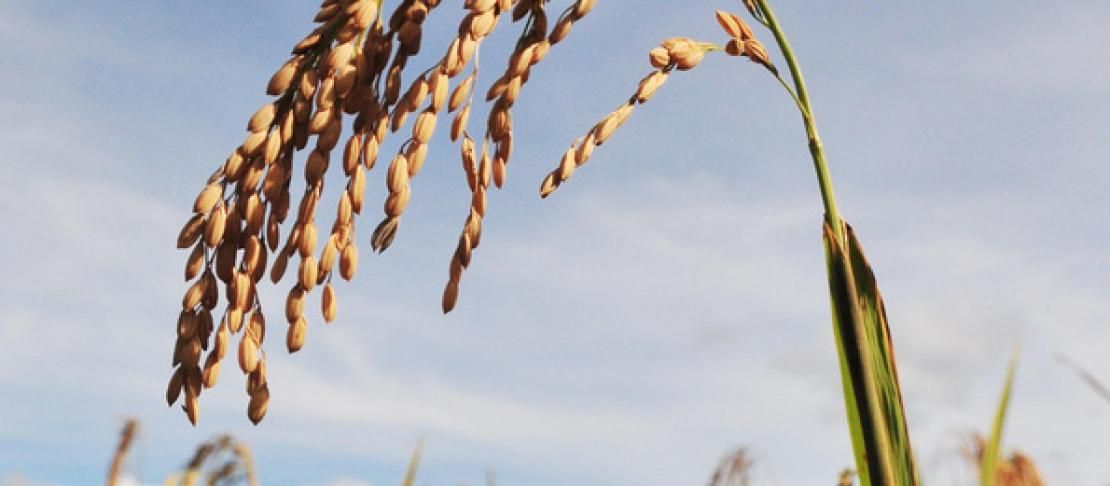
The first phase of this project was conducted in 4 project sites (Karnal, Haryana; Ludhiana, Punjab; Pusa, Bihar; and Varanasi, Uttar Pradesh). At each site 10 farmers were selected to carry out field experiments on 10 wheat varieties that were selected based on their earlier performance. A similar farmers' field trial was conducted for rice growers where a set of 14 rice varieties and 20 selected germplasm accessions were grown at 2 diverse agro-climatic locations (Karnal, Haryana and Pusa, Bihar) in India and at Parwanipur, Nepal during the Kharif season of 2011. Similarly, wheat experimentation with several farmers in Karnal, Haryana and Vaishali, Bihar with 21 wheat varieties and 28 selected germplasm accessions is under progress. During these field trials, farmers' field days were organised where several hundred farmers at each location participated and evaluated the adaptability and resilience of these varieties and germplasm and the possibility of utilising them to mitigate potential climate risks.
In another project, information of existing ex situ germplasm collections of wheat, rice, pearl millet, sorghum, pigeonpea, chickpea and barley from national genebanks are being mapped and classified based on their suitability for different agro-climatic conditions using GIS-based climate modelling/homologues-analogues approaches.
The selected materials identified will be multiplied for seed increase to be used for further validation for climate adaptation and other experimentation, especially for the validation of analogues. A national GIS-based database, which will allow users to access information on germplasm passport, characterization and evaluation information coupled with climate database of the respective collecting sites will be developed and made available to researchers and local communities.
More information
Read more about Climate Change, Agriculture and Food Security work in South Asia.
This blog post was written by Prem Narain Mathur, Bioversity International.