
Embracing uncertainty, and getting on with climate adaptation
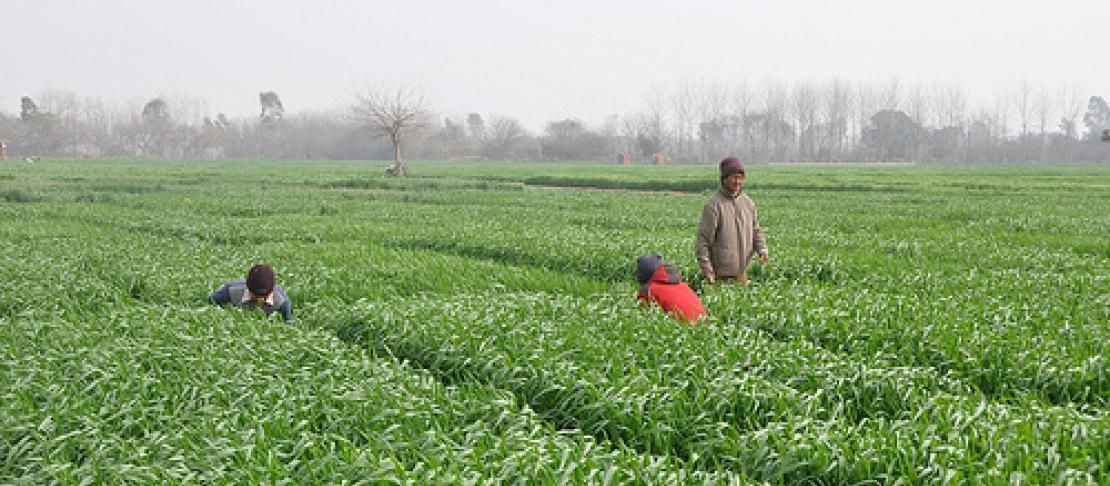
Yesterday we launched a series of reports which look at the effectiveness of global climate models in predicting agricultural impacts in Africa and South Asia, with a particular emphasis on their ability to predict how climate change will affect key crops in those regions. The results are not surprising: we don't have perfect climate projections for agriculture, and in many cases, the data is quite weak. So what can we do about it?
In a live video seminar yesterday, lead authors Mark New from the University of Cape Town and Richard Washington from Oxford University, noted the weaknesses and emphasized that in some cases, a variety of models can be used together to overcome individual weaknesses. Watch the seminar:
This approach, however, requires quite a lot of time and effort. On the bright side, the authors noted that more and more information is becoming available. The studies also highlight where models need further development, providing a useful guide for research investments.
The overarching message is that this uncertainty not an excuse for inaction. In response to yesterday's report, our colleagues at CIAT have published an insightful analysis of the role of uncertainty. Rather than being something that dogs climate science, uncertainty must be perceived as a basic feature and can even be a positive driver:
...[N]o matter how precisely we try to quantify future climate change and its effects on agriculture, there will always be a margin for error. But this shouldn’t stop us planning for uncertainty itself.
That’s because for doomsdayers, naysayers and all their acolytes, uncertainty is the unifying principle of all climate research.
Only by recognising the certainty of uncertainty – the inevitability of change itself – and letting that drive the research agenda, will we give ourselves the greatest possible chance of boosting food production, and the resilience of the billions of people inextricably linked to it. That means us, by the way. All of us.
The analysis goes on to note how work on adaptation can - and must- continue, even with less than perfect information. The story has just been picked up by Reuters AlertNet Climate and we hope it will help to shed some positive light on many of the innovations for agricultural climate change adaptation that are under development, including getting weather information to farmers, and adapting crops to changing conditions.
Browse and Download the Reports
Read more about our work on Data and Tools for Analysis and Planning
Read related stories on our blog