

Dryland agriculture faces climate risks but solutions are on hand

By Jack Durrell
Shifting climate patterns are having their most acute effect on people living in the world’s dry areas. These rural communities are largely dependent on agriculture, so improving agricultural research and practices are the primary protection from climate related problems, according to a new report released today.
An international partnership – CGIAR Research Program on Climate Change, Agriculture and Food Security (CCAFS) with the International Center for Agricultural Research in the Dry Areas (ICARDA), the CGIAR Research Programs on Dryland Systems and the Qatar National Food Security Program – is pressing for agricultural research to become a strategic priority of the UN’s efforts on climate change.
The case will also be made at Agriculture, Landscapes, and Livelihoods Day 5, a forum for the natural resource and agriculture community to share solutions for climate change adaptation and mitigation.
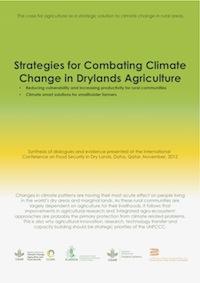 This case – made in a report entitled Strategies for Combating Climate Change in Drylands Agriculture – stresses that targeted agricultural investment in innovative technologies and practices, backed up by robust policies, can reduce the vulnerability of farming communities to drought and climate change and sustainably improve agricultural activity.
Proven interventions to be shared include improved crop varieties and livestock breeds, farming practices that reduce risk and improve nutrition, efficient water management, and ‘climate smart’ technologies.
Given the chance to seize available opportunities, scientists will contend that farmers can increase food production to keep pace with growing populations and reduce the need for costly food imports.
Projections from the recently launched CGIAR Research Program on Dryland Systems suggest the planned interventions will result in higher and more secure income for 87 million people, while improving the productive capacity of natural resources and reducing environmental degradation across nearly 11 billion hectares.
Scientists also expect significant increases in agricultural productivity: by 20-30 per cent in high potential areas and 10-20 per cent in low potential or marginal lands.
Download the report: Strategies for Combating Climate Change in Drylands Agriculture
Jack Durrell works with the International Center for Agricultural Research in the Dry Areas (ICARDA). Follow their updates on twitter @ICARDA_CGIAR and facebook.